Are you tired of being tied to a traditional TV provider? We’re here to guide you through the world of cord cutting and explore the benefits of a more flexible viewing experience.
Cutting the cord can seem daunting, but it’s becoming increasingly popular. Viewers seek more control over their entertainment. With cable-free television, you can enjoy your favorite shows and movies without expensive subscription fees.
Key Takeaways
- Discover the benefits of cord cutting and how it can enhance your viewing experience.
- Learn about the various options available for cable-free television.
- Understand how to make a seamless transition to a more flexible TV solution.
- Explore the cost savings and increased control that come with cord cutting.
- Find out how to personalize your TV experience with cable-free options.
Why Cable Free Television Is Becoming the New Norm
More people are choosing cable-free TV because it’s cheaper. The old TV world is changing fast. This change is because of streaming tv services and internet tv options. People are unhappy with the old cable TV packages.
https://www.youtube.com/watch?v=m8iD0nV5Xqo
The Rising Costs of Traditional Cable Packages
High costs of traditional cable TV are pushing people to switch. Cable prices keep going up. This makes it hard for families to afford it.
Also, cable TV doesn’t offer good value anymore. Streaming services let you pick what you want to watch. This is better for those who like to choose their own TV shows.
Flexibility and Customization Benefits
Cable-free TV gives you more freedom and choices. With streaming tv services, you can pick from many platforms. You can find content that fits your interests, like movies or sports.
You can watch on many devices, like smart TVs or phones. This means you can watch your favorite shows anywhere, anytime.
On-Demand Content Advantages
Another big plus of cable-free TV is watching what you want when you want. Unlike old cable TV, internet tv options let you watch on your schedule.
This is great for younger viewers who like to watch at their own pace. You can pause, rewind, and fast-forward. This makes watching TV more fun and personal.
Essential Components of a Cable-Free Setup
To set up a cable-free TV system, you need a few key things. First, you must know the parts of this system. This includes streaming services, devices, and a good internet connection.
Streaming Services Overview
Streaming services are the heart of cable-free TV. They offer lots of content. These services fall into two main types: live TV streaming and on-demand streaming.
Live TV Streaming Options
Live TV streaming services like Hulu Live, YouTube TV, and Sling give you live TV channels. You can watch sports, news, and entertainment live. They’re great for those who love live TV.
Hulu Live has many channel packages, focusing on entertainment and sports. YouTube TV has a lot of channels, especially sports and news. Sling lets you choose the channels you want.
On-Demand Streaming Platforms
On-demand services like Netflix, Disney+, and HBO Max have lots of content to watch anytime. They’re perfect for binge-watching or finding new shows.
- Netflix is famous for its original shows and movies.
- Disney+ is loved by families for its Disney, Pixar, Marvel, and Star Wars content.
- HBO Max has premium TV series and movies, making it a top choice for cable-free setups.
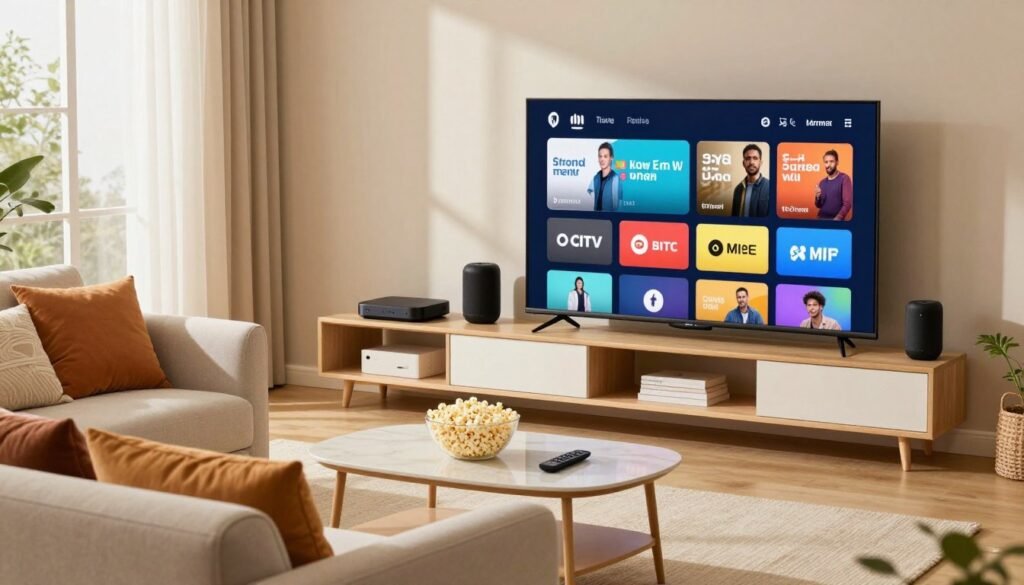
Streaming Devices and Smart TVs
To watch these services, you need a device that can stream to your TV. You can use streaming devices or Smart TVs.
Popular Streaming Devices
Popular devices include Roku, Amazon Fire TV, and Apple TV. They connect to your TV and let you access many streaming services.
Roku is easy to use and has a big channel store. Amazon Fire TV works well with Amazon services and has a powerful voice remote. Apple TV is good for Apple fans, offering easy integration with other Apple devices.
Smart TV Capabilities and Limitations
Many modern TVs are “smart,” with internet and streaming apps built-in. Smart TVs are convenient but might not have all the latest features or services.
It’s important to check your Smart TV’s features. You might need a dedicated streaming device for all the content you want.
Internet Requirements for Smooth Streaming
A fast and stable internet connection is key for smooth streaming. The internet speed you need depends on the streaming quality and how many devices you’re using.
| Streaming Quality | Recommended Internet Speed |
|---|---|
| SD (Standard Definition) | 3 Mbps |
| HD (High Definition) | 5 Mbps |
| 4K (Ultra High Definition) | 25 Mbps |
If you have many devices at home, get a faster internet plan. This ensures smooth streaming for everyone.
Step-by-Step Guide to Cutting the Cord
With the rise of streaming services, cutting the cord is now easy. We’ll guide you through it.
Assessing Your Viewing Habits and Preferences
First, know what you watch and how. Take note of your favorite channels, shows, and devices. This helps you choose the right digital cable alternatives.
- What type of content do you watch most often (movies, sports, news, etc.)?
- Which streaming services do you currently use or have considered using?
- Do you have a preference for live TV or on-demand content?
Answering these questions helps you pick the best digital cable alternatives for you.
Selecting the Right Combination of Streaming Services
With your viewing habits clear, pick the streaming services that fit your preferences. Here are some popular ones:
- Netflix: Known for its vast library of on-demand content, including original series and movies.
- Hulu: Offers a range of TV shows, movies, and documentaries, with options for live TV.
- Amazon Prime Video: Includes a vast library of content, including original productions and additional benefits for Amazon Prime members.
- Disney+: A relatively new entrant, offering a wealth of Disney, Pixar, Marvel, and Star Wars content.
- Sling TV and YouTube TV: Popular choices for live TV streaming.
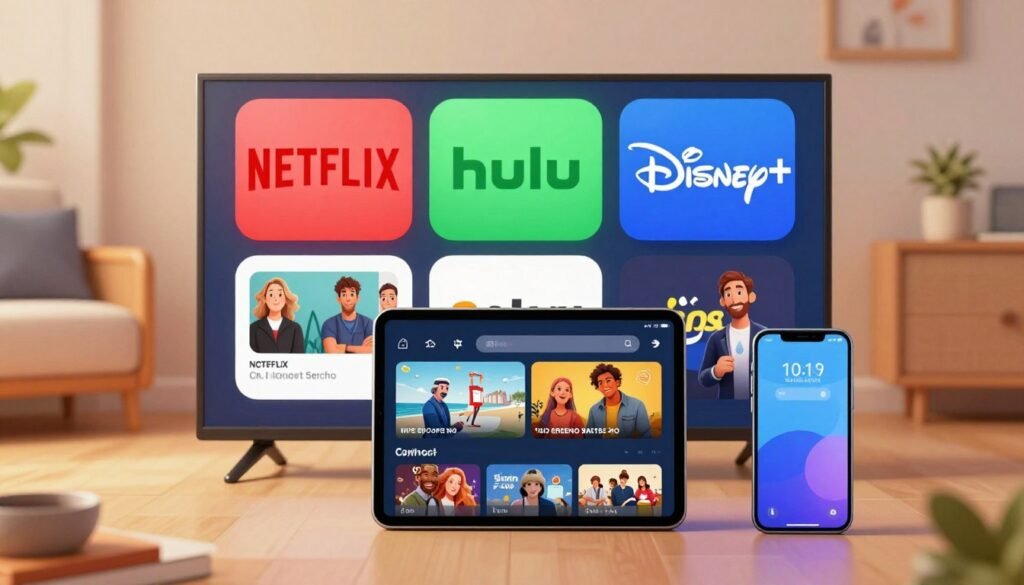
When picking services, think about the content, cost, and whether they offer live TV or on-demand. You might find a mix works best for you.
Setting Up Your New Entertainment System
After picking services, set up your new entertainment system. Choose the right streaming device setup or smart TV.
- Roku: Offers a wide range of channels and easy integration with other smart devices.
- Amazon Fire TV: Provides seamless access to Amazon Prime Video and other streaming services.
- Google Chromecast: Allows for easy casting from mobile devices to your TV.
- Apple TV: Integrates well with other Apple devices and offers a sleek user interface.
Make sure your streaming device is connected to a stable internet. This avoids buffering and streaming issues.
By following these steps, you’ll enjoy a cable-free TV experience that fits your viewing habits and preferences.
Conclusion
Switching to a cable-free TV setup brings many benefits. It saves money and gives more freedom. Viewers can watch their favorite shows and movies on different streaming services.
Streaming media players are key in this new world. They make it easy to find and watch lots of content. The TV industry is always changing, so we’ll see even better options soon.
Choosing cable-free TV means better entertainment and more control over what we watch. As tech gets better, streaming services will keep improving. It’s exciting to think about what the future holds for how we watch media.